A spongy monolith (SPM) is a flexible porous separation medium made from poly(ethylene-co-glycidyl methacrylate), a general-purpose polymer that is already manufactured at the industrial scale. The large through-pores of SPM (5 μm to several hundreds μm), which are significantly larger those of conventional separation media, enable highly permeable separations.
Moreover, SPM easily binds with a wide range of protein ligands and functional groups because of the presence of reactive epoxide groups on its surface, which can react with NH2, SH, OH, etc. As a result, various biomolecules can be immobilized on the SPM surface without laborious procedures.
SPM is expected to serve as a next-generation medium.
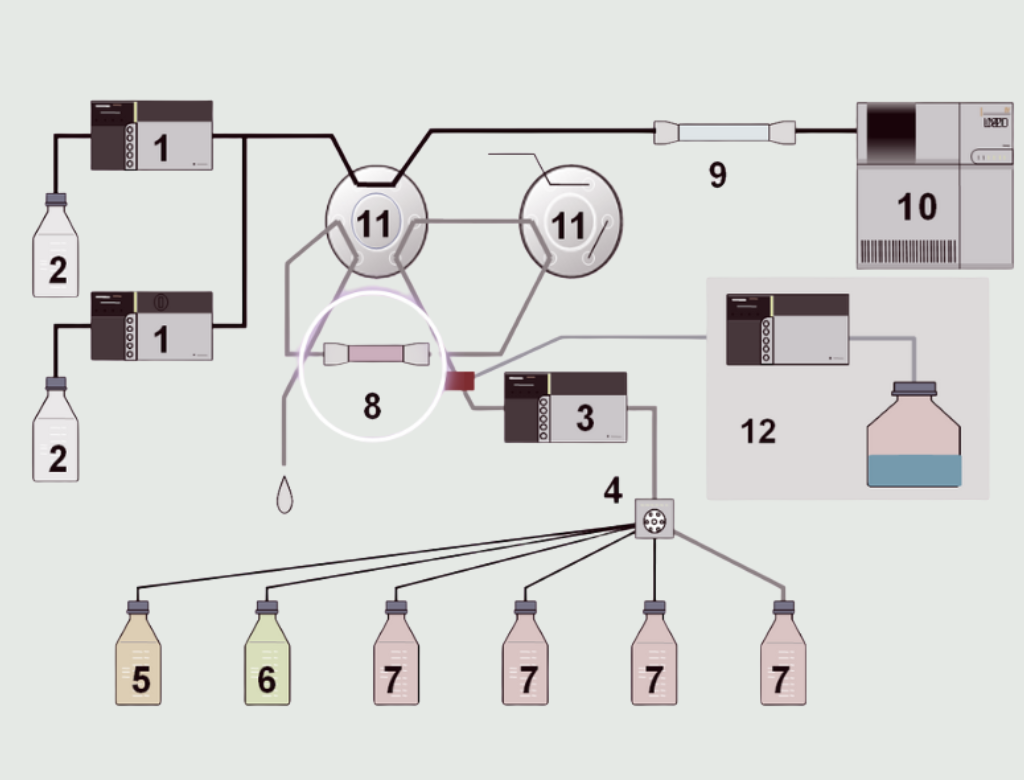
Preconcentration of Bisphenol A in Environmental Water by Column-Switching LC with a Spongy Monolithic Column
The sample solution is introduced by a pump, and BPA is concentrated on the pretreatment column (8, SPM column). After valve switching, the concentrated BPA is transferred to the analytical column, where it is separated and detected.
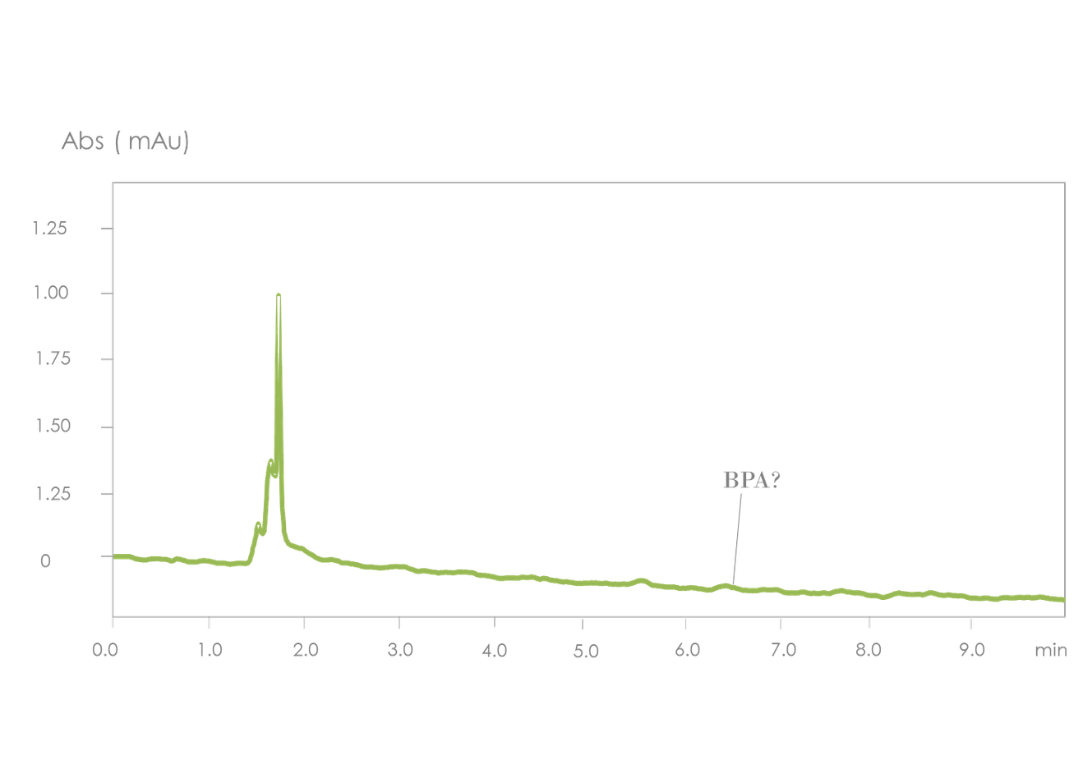
Before Pretreatment (50 µL)
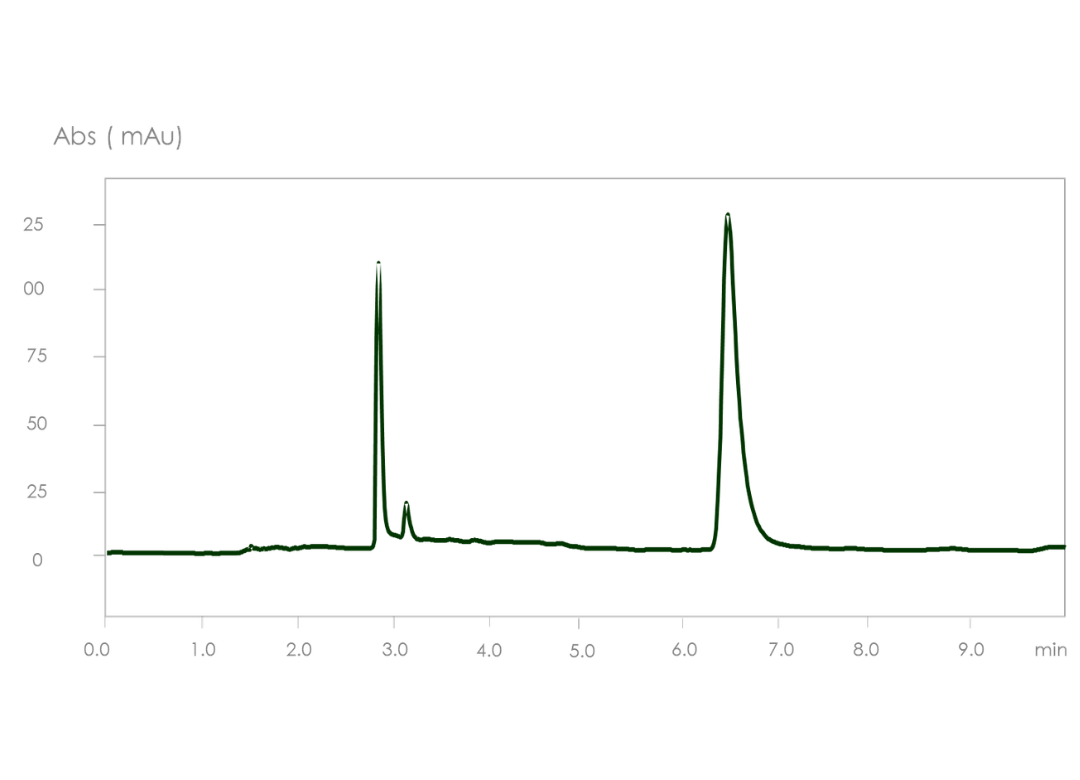
After Pretreatment Using Spongy Monolith (50 mL)
Bisphenol was successfully concentrated using online column switching.
Target compounds can be concentrated at high flow rates without compromising recovery.