In the development of separation media for high-performance liquid chromatography (HPLC), improving separation performance has been a primary focus. At the same time, miniaturization and advanced functionality of materials have also been required. In pharmaceutical, environmental, and synthetic chemistry fields, there is a strong demand to reduce operation time and costs. However, the existing separation media cannot fully address these challenges and often cannot achieve efficient separation, particularly for macromolecules such as antibody drugs and extracellular vesicles, RNA,viruses, and cells, which are expected to play key roles in future drug development.
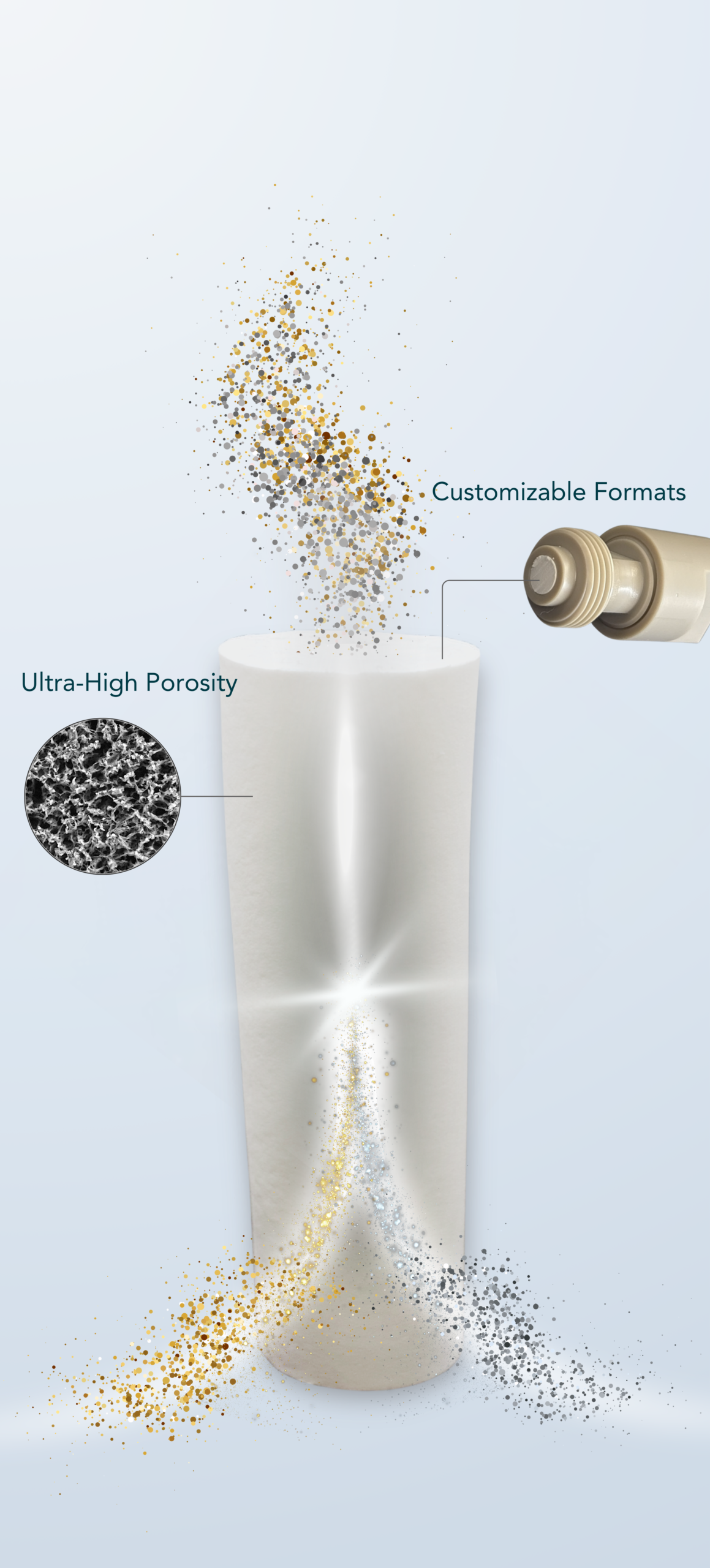
In conventional HPLC, particle-packed columns are generally utilized, while monolithic columns with continuous through-pores are also employed in certain applications. The SPM column developed at Kyoto University offers superior permeability because of its through-pores, ranging from 5 μm to several hundreds μm, which are significantly larger than those of typical monolithic columns. Moreover, a wide range of protein ligands can be easily immobilized onto highly reactive epoxide groups on the SPM surface, which is composed of poly(ethylene-co-glycidyl methacrylate) (PEGM). As a result, SPM achieves high throughput and high selectivity, drawing attention as a next generation separation medium.
JP patent No. 6622608
Contact Us
We offer free samples for research. Please contact us via our contact page. We are also open to discussing collaborative research opportunities.